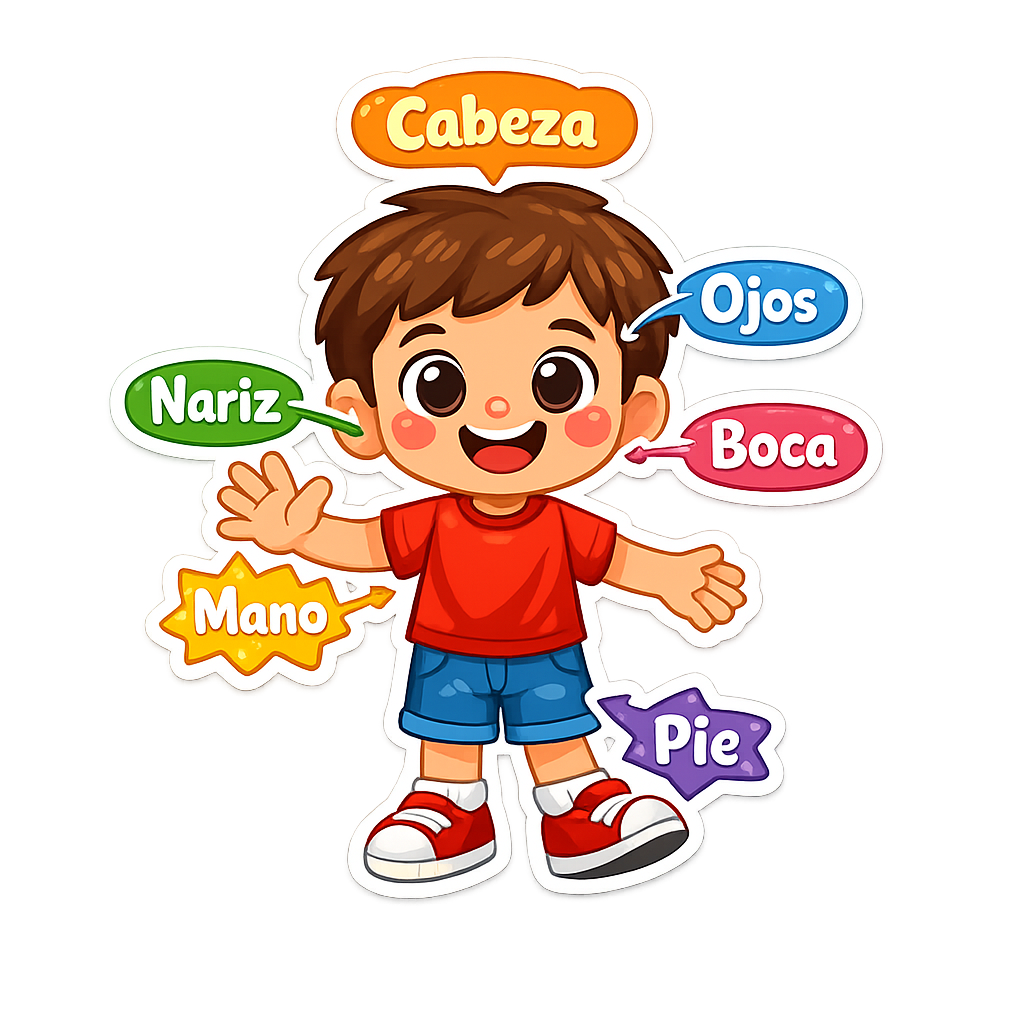



The topic of body parts is useful not only in anatomy lessons. In Spanish, these words are often used in everyday life: at the doctor’s office, at the gym, when describing appearance, well-being, and daily actions. That is why it is better to learn this vocabulary together with examples from the beginning.
Table of contents
Face and Head
Head in Spanish is la cabeza. This is one of the basic words that often appears in everyday speech. For example, if you have a headache, you say: Me duele la cabeza — my head hurts.
Face is la cara. This word is used when describing appearance, emotions, or facial expression:
Tiene una cara muy amable.
He / she has a very kind face.
¿Por qué tienes esa cara?
Why do you have that face?
In Spanish, most body parts are used with an article. Very often, instead of possessive pronouns such as “my,” “your,” or “his/her,” Spanish uses the definite articles el, la, los, las, especially when it is clear whose body is being discussed.
For example, in Spanish people usually say:
Me duele la cabeza.
My head hurts.
Not literally “my head.”
Main words on the topic “face and head”:
| English | Spanish | Example |
|---|---|---|
| head | la cabeza | Me duele la cabeza. |
| face | la cara | Tiene la cara redonda. |
| hair | el pelo / el cabello | Tiene el pelo largo. |
| eye | el ojo | Tiene los ojos verdes. |
| nose | la nariz | Tiene la nariz pequeña. |
| mouth | la boca | Abre la boca. |
| lips | los labios | Tiene los labios rojos. |
| teeth | los dientes | Me duelen los dientes. |
| tongue | la lengua | Saca la lengua. |
| ear | la oreja | Me duele la oreja. |
| forehead | la frente | Tiene la frente caliente. |
| cheek | la mejilla | Le dio un beso en la mejilla. |
| chin | la barbilla | Tiene la barbilla marcada. |
| neck | el cuello | Me duele el cuello. |
The word el pelo is used more often in everyday speech when talking about hair. El cabello sounds a little more neutral or formal; it can be found in advertising, beauty salons, and descriptions of hair care.
For example:
Tengo el pelo rizado.
I have curly hair.
Tiene el cabello oscuro.
He / she has dark hair.
For eyes, the word los ojos is used in the plural when talking about both eyes:
Tiene los ojos azules.
He / she has blue eyes.
Cierra los ojos.
Close your eyes.
There are also common everyday phrases with the nose, mouth, and ears:
Respira por la nariz.
Breathe through your nose.
Abre la boca.
Open your mouth.
Me duelen los oídos.
My ears hurt.
Important: la oreja is the outer ear, the part we can see. El oído is the ear as an organ of hearing. That is why at the doctor’s office you will more often hear me duele el oído, while when describing appearance, you may hear tiene las orejas pequeñas.
Torso
Torso in Spanish can be called el tronco, but in everyday speech people more often use specific body parts: back, chest, stomach, shoulders, arms. These words are especially useful when you need to describe pain, movement, or physical condition.
Back is la espalda. This is one of the most necessary words because back pain is a common complaint:
Me duele la espalda.
My back hurts.
Tengo la espalda cansada.
My back is tired.
Chest / rib cage is el pecho or la caja torácica. In everyday speech, el pecho is used more often. This word can mean the chest as a body area. In a medical context, you may see la caja torácica — rib cage.
Me duele el pecho.
My chest hurts.
La caja torácica protege los pulmones y el corazón.
The rib cage protects the lungs and the heart.
Stomach / abdomen is el abdomen or la barriga. El abdomen sounds more neutral and medical, while la barriga is conversational.
Me duele el abdomen.
My abdomen hurts.
Me duele la barriga.
My stomach hurts.
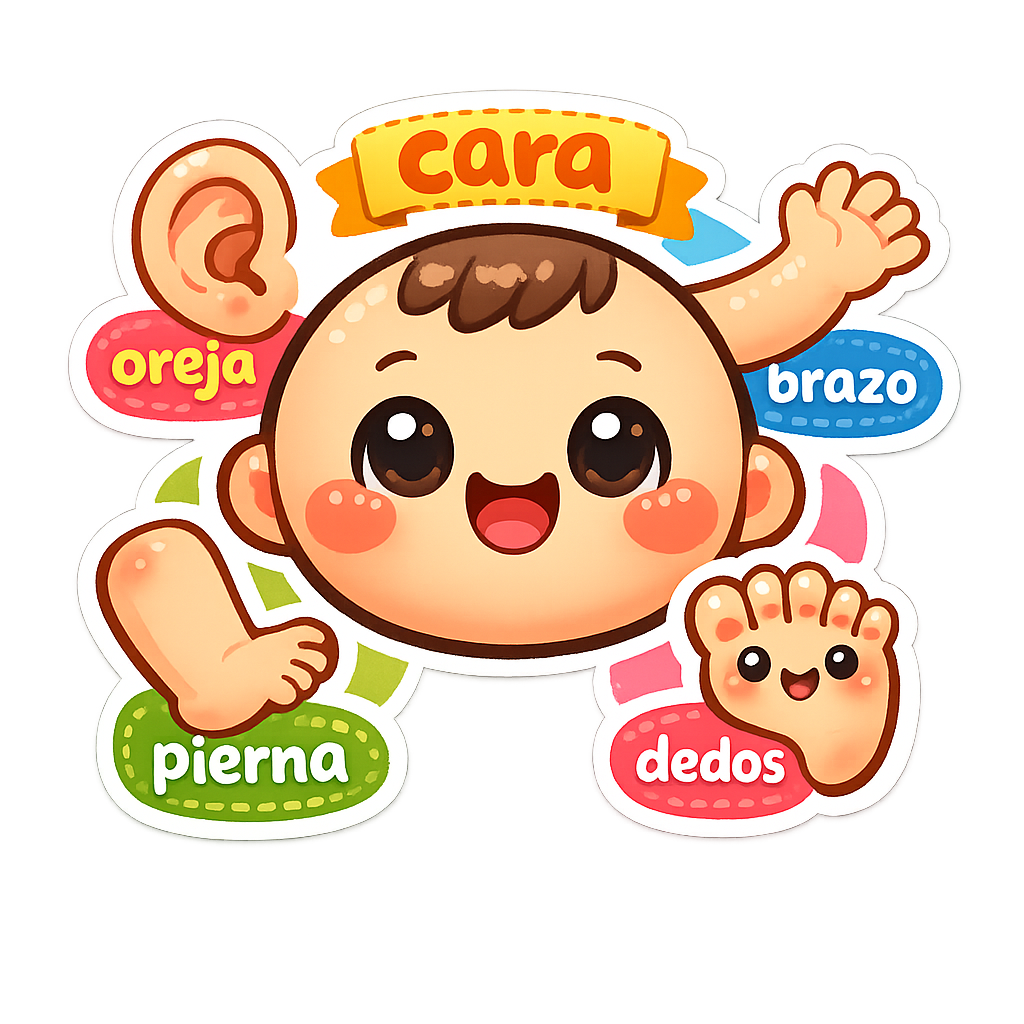
Shoulder is el hombro, arm is el brazo, and hand is la mano. In English, “arm” and “hand” are already different words, and Spanish also separates them clearly. El brazo is the part from the shoulder to the hand, while la mano is the hand.
Levanta el brazo.
Raise your arm.
Dame la mano.
Give me your hand.
Elbow is el codo, wrist is la muñeca, and fingers are los dedos. Interestingly, la muñeca also means “doll,” so the meaning depends on the context.
| English | Spanish |
|---|---|
| torso | el tronco |
| back | la espalda |
| chest / chest area | el pecho |
| rib cage | la caja torácica |
| abdomen / belly | el abdomen / la barriga |
| waist | la cintura |
| shoulder | el hombro |
| arm | el brazo |
| elbow | el codo |
| wrist | la muñeca |
| hand | la mano |
| finger | el dedo |
| skin | la piel |
| heart | el corazón |
| lungs | los pulmones |
The word los dedos can mean both fingers and toes. If you need to clarify, you say:
los dedos de la mano — fingers
los dedos del pie — toes
To describe pain in the body, the following construction is often used:
Me duele + body part in the singular.
Me duelen + body part in the plural.
For example:
Me duele el hombro.
My shoulder hurts.
Me duelen los brazos.
My arms hurt.
Me duele la espalda.
My back hurts.
Legs
It is also important to distinguish leg-related words in Spanish. La pierna is the leg in general, from the thigh to the foot. El pie is the foot. So the phrases will be different:
Me duele la pierna.
My leg hurts.
Me duele el pie.
My foot hurts.
Thigh is el muslo, knee is la rodilla, ankle is el tobillo, and heel is el talón. These words are often needed when describing injuries, sports, dancing, fitness, or a visit to the doctor.
| English | Spanish | Example |
|---|---|---|
| leg | la pierna | Me duele la pierna. |
| foot | el pie | Tengo frío en los pies. |
| thigh | el muslo | Me duele el muslo. |
| knee | la rodilla | Dobla la rodilla. |
| ankle | el tobillo | Me torcí el tobillo. |
| heel | el talón | Me duele el talón. |
| toes | los dedos del pie | Mueve los dedos del pie. |
The word los pies is often used in everyday phrases:
Tengo los pies fríos.
My feet are cold.
Me duelen los pies.
My feet hurt.
Estoy de pie.
I am standing.
Ir a pie means “to go on foot”:
Voy a la escuela a pie.
I go to school on foot.
If we are talking about movement, these verbs are useful:
caminar — to walk
correr — to run
saltar — to jump
sentarse — to sit down
levantarse — to get up
Examples:
Camino mucho todos los días.
I walk a lot every day.
No puedo correr, me duele la rodilla.
I cannot run; my knee hurts.
Levántate y estira las piernas.
Get up and stretch your legs.
Useful Popular Phrases
To remember words on the topic of body parts faster, it is better to learn them not separately, but in ready-made phrases. This way, you immediately understand how they work in real speech.
The most important construction is me duele / me duelen. It is used when we talk about pain.
Me duele la cabeza.
My head hurts.
Me duele la garganta.
My throat hurts.
Me duele la espalda.
My back hurts.
Me duelen los ojos.
My eyes hurt.
Me duelen las piernas.
My legs hurt.
If you need to say that you do not feel well, you can use:
No me siento bien.
I do not feel well.
Estoy cansado / cansada.
I am tired.
Tengo dolor de cabeza.
I have a headache.
Tengo dolor de garganta.
I have a sore throat.
Tengo frío en las manos.
My hands are cold.
Tengo frío en los pies.
My feet are cold.
There are also phrases that are often used in lessons, training sessions, or at the doctor’s office:
Levanta la mano.
Raise your hand.
Abre la boca.
Open your mouth.
Cierra los ojos.
Close your eyes.
Respira por la nariz.
Breathe through your nose.
Dobla la rodilla.
Bend your knee.
Estira los brazos.
Stretch your arms.
Mueve los dedos.
Move your fingers.
Gira la cabeza.
Turn your head.
It is also useful to remember expressions with body parts that are not used only literally:
No tengo cabeza para esto.
I cannot think about this right now / my head is not working for this.
Echar una mano.
To help.
Estar hasta las narices.
To be fed up.
Tener buen corazón.
To have a good heart.
Costar un ojo de la cara.
To cost a fortune.
Body parts in Spanish are a basic but very practical topic. These words help describe appearance, talk about how you feel, understand a doctor, follow instructions, and communicate in everyday situations. Start with the most common words: la cabeza, la cara, los ojos, la espalda, el brazo, la mano, la pierna, el pie. Then learn them in phrases: this way, the vocabulary will move into live speech faster.