



When you live in or travel around Spain, you quickly realise that people here love sweets just as much as jamón, tapas, or seafood. And every region has its own favourites. In Mallorca, people buy ensaimadas; in Galicia, almond cake is a classic; and before Christmas, shops fill up with boxes of crumbly biscuits.
Table of contents
- Churros con chocolate — churros with hot chocolate
- Crema catalana — Catalan cream
- Tarta de Santiago — almond cake
- Torrijas — the Spanish version of sweet toast
- Flan — a dessert you can find almost everywhere
- Leche frita — milk that really can be “fried”
- Ensaimada — something you should try in Mallorca
- Arroz con leche — rice, milk, and a little nostalgia
- Tocino de cielo — no bacon involved
- Polvorones — the taste of Spanish Christmas
- Mantecados — another December favourite
- Panellets — small but surprisingly filling
- Pestiños — honey, spices, and southern Spain
- Buñuelos — Spanish doughnuts, but not quite
- Natillas — homemade cream rather than restaurant glamour
- Quesada pasiega — a sweet from northern Spain
- What Should You Try First?
Churros con chocolate — churros with hot chocolate
This is probably the most obvious item on the list. But leaving out churros would simply feel wrong.
They are made from dough that is fried in hot oil in long strips. They are crispy on the outside and soft inside. Sometimes they are served with just sugar, but the classic version comes with a cup of very thick hot chocolate.
And yes, the chocolate is there partly so you can dip the churros straight into it.
In Spain, eating them in the morning is completely normal. For many people, a Sunday breakfast with churros con chocolate is nothing unusual.
Phrase:Quiero unos churros con chocolate, por favor. — I’d like some churros with chocolate, please.
Crema catalana — Catalan cream
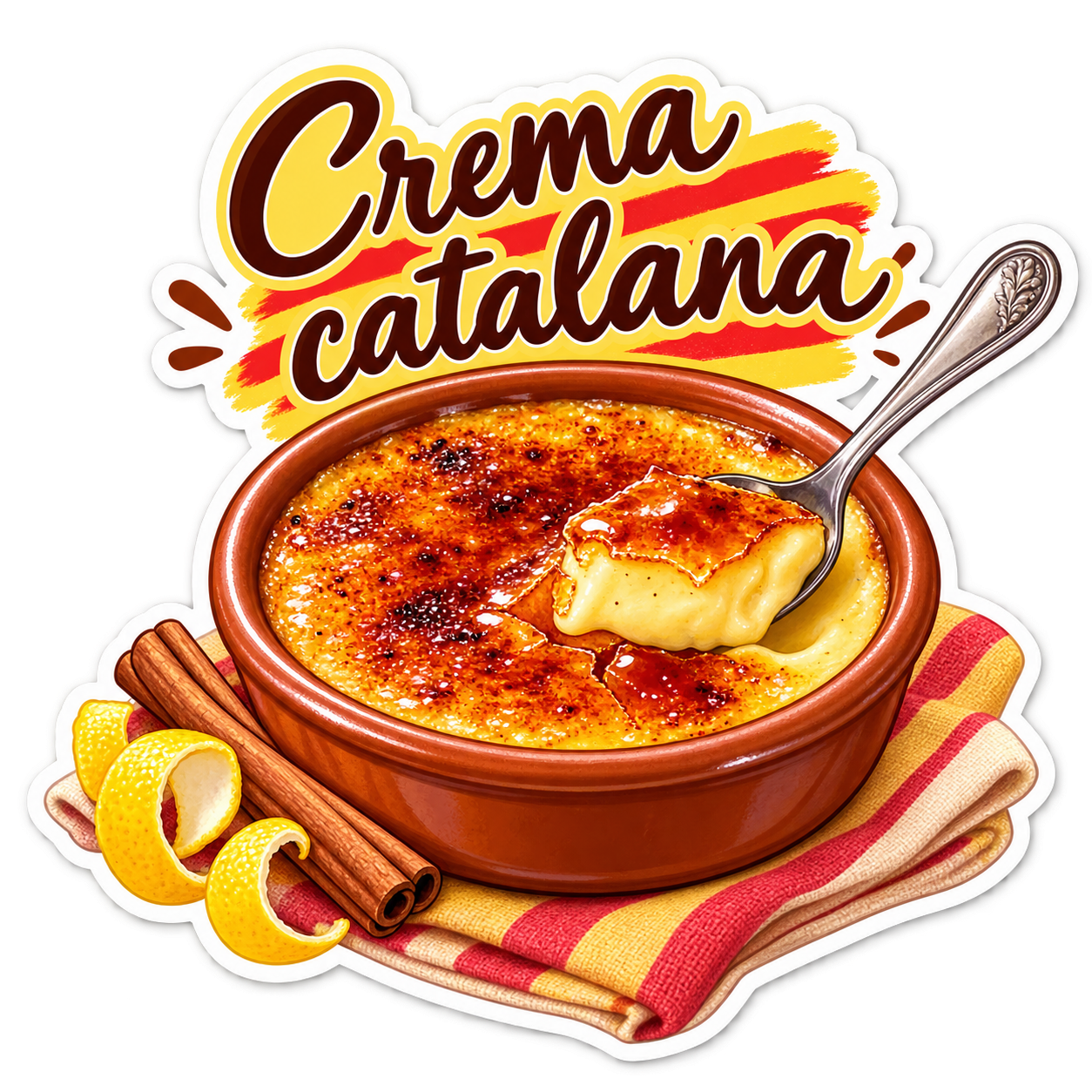
At first glance, you might think you are looking at crème brûlée. The resemblance is definitely there: soft cream underneath and a thin caramelised layer on top.
But crema catalana is traditionally prepared a little differently. It is usually made with milk, egg yolks, and sugar. Cinnamon and lemon zest are often added for flavour.
Before serving, the sugar on top is caramelised until it forms a hard crust. Breaking that crust with a spoon is probably half the fun.
The dessert is sweet, but usually not too heavy. Even after a big dinner, it is quite manageable.
Phrase:La crema catalana está deliciosa. — The crema catalana is delicious.
Tarta de Santiago — almond cake
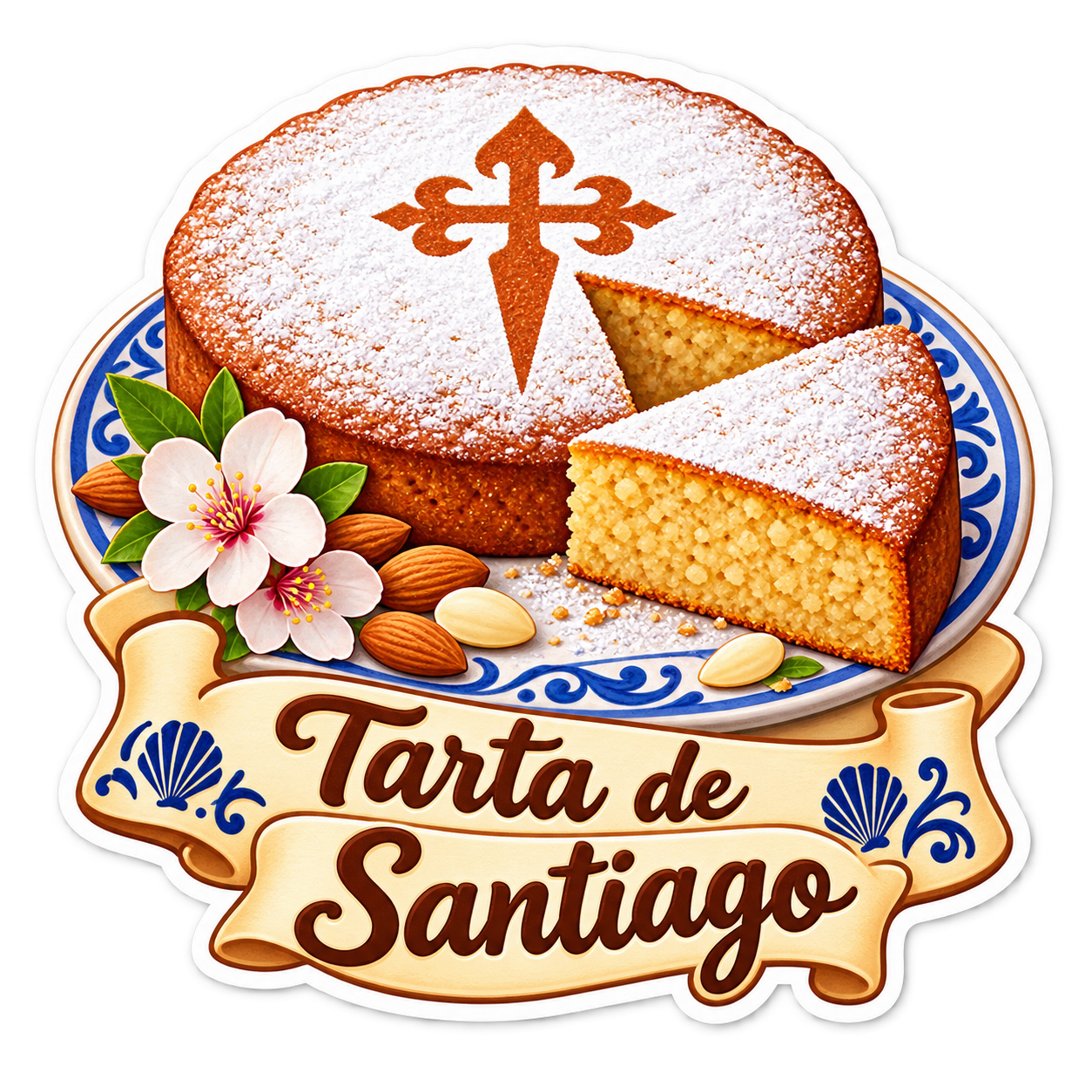
If you visit Galicia, this is one of those desserts that is difficult to miss.
Tarta de Santiago is easy to recognise because of the powdered sugar and the Cross of Saint James on top. Inside, the ingredients are fairly simple: plenty of ground almonds, eggs, and sugar.
The almonds give the cake its distinctive flavour and slightly moist, dense texture.
It is not a light sponge cake and it is not covered in layers of cream. It is more the kind of cake that goes perfectly with coffee, especially if you like nuts.
Phrase:Me gustaría probar la tarta de Santiago. — I’d like to try Tarta de Santiago.
Torrijas — the Spanish version of sweet toast
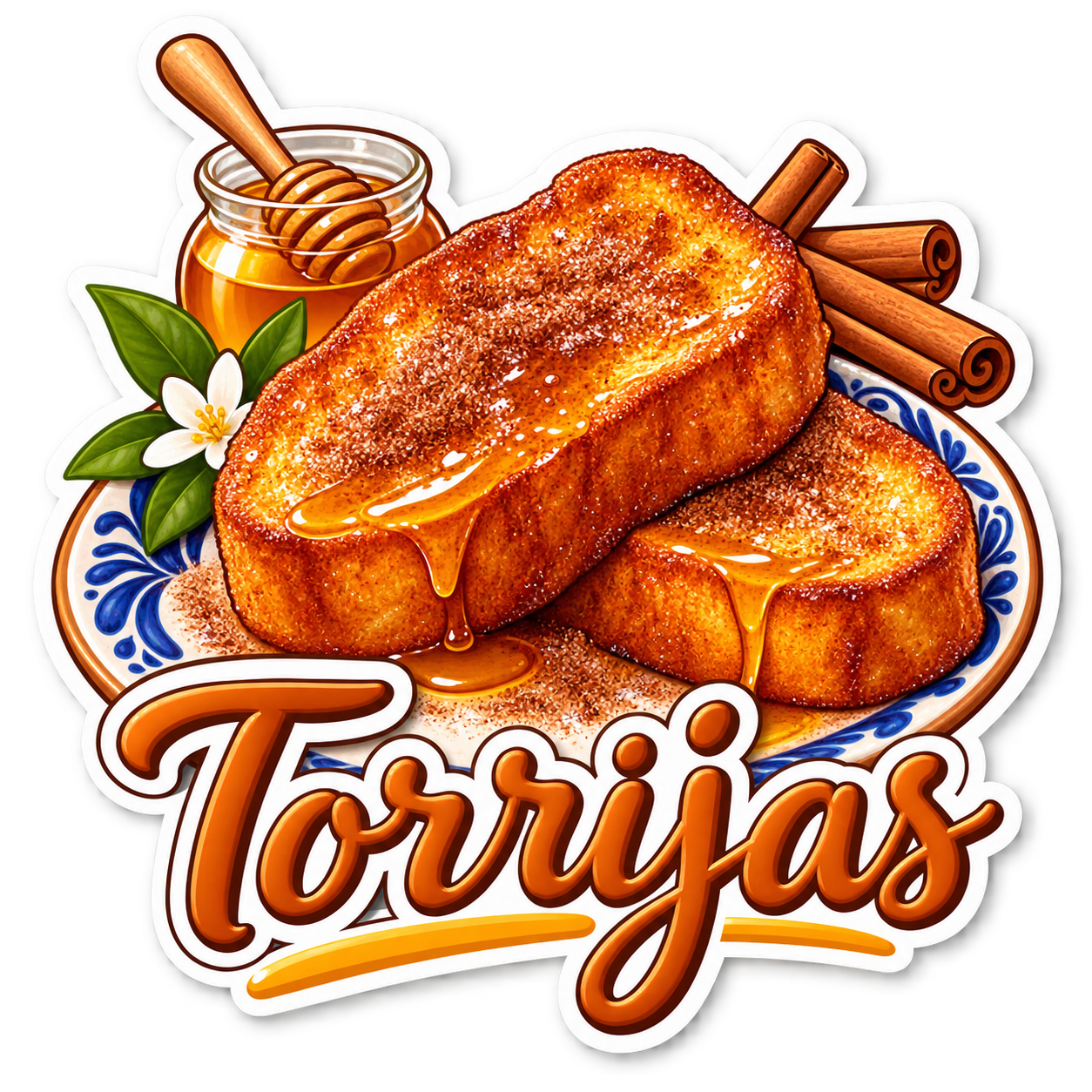
In spring, torrijas start appearing everywhere in Spain. You see them especially often during Semana Santa.
Bread is soaked well in milk flavoured with cinnamon and citrus zest, then dipped in egg and fried.
After that, everyone seems to have their own version. Some add cinnamon sugar, others use honey or syrup.
The bread becomes very soft and juicy inside. If you have tried French toast, you already have a rough idea, although Spanish torrijas are usually much more thoroughly soaked.
Phrase:En Semana Santa siempre comemos torrijas. — We always eat torrijas during Holy Week.
Flan — a dessert you can find almost everywhere
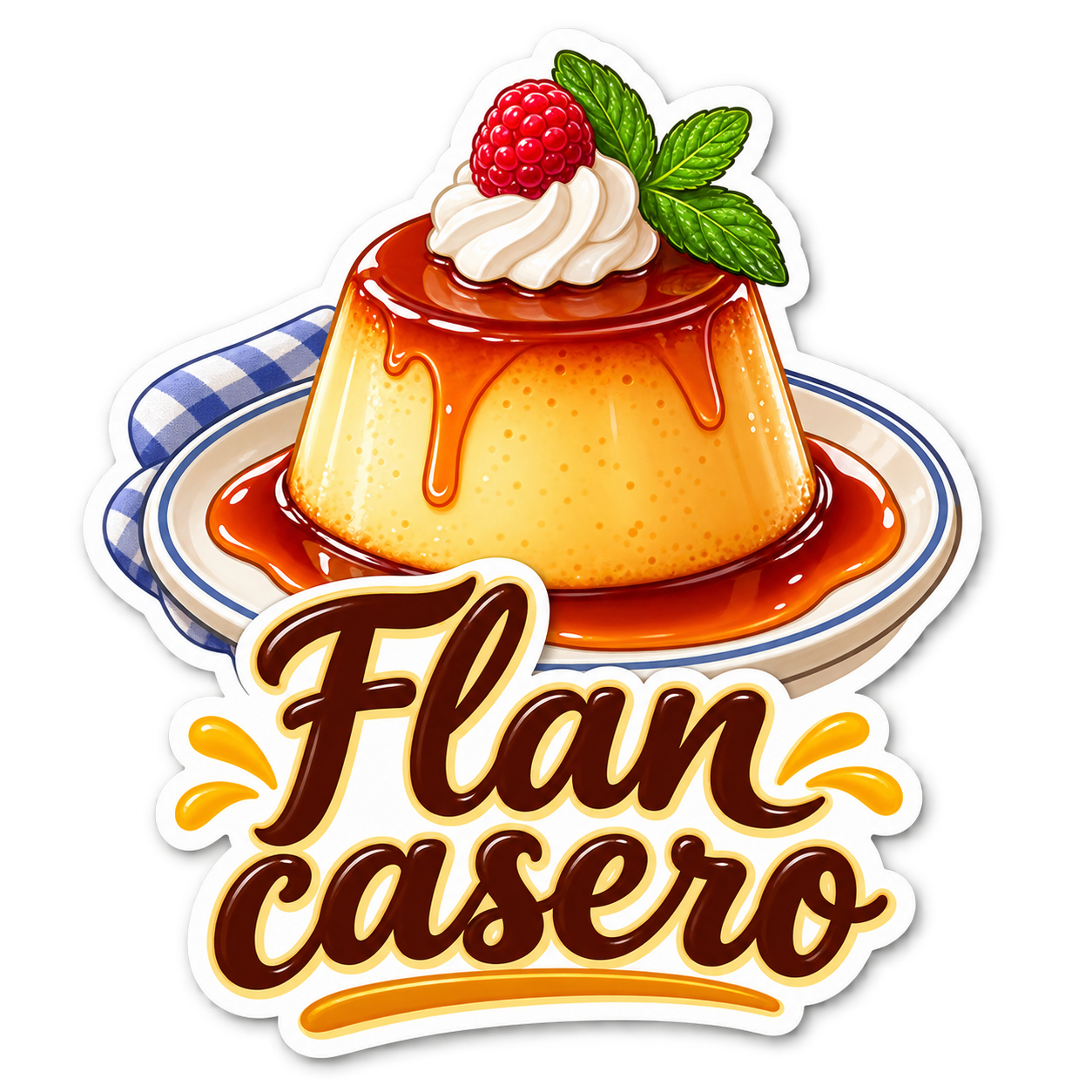
Flan looks so simple that sometimes you do not expect much from it. Then you order it once and start choosing it again.
Milk, eggs, sugar, and caramel — nothing complicated.
The finished flan is turned upside down onto a plate, so the liquid caramel ends up on top and runs down the sides.
Its texture should be soft and almost silky. You can find firmer versions too, but a good homemade flan is usually very smooth.
Phrase:De postre voy a pedir flan. — I’m going to order flan for dessert.
Leche frita — milk that really can be “fried”
The name leche frita literally means “fried milk.” It sounds suspicious, but the dessert itself is easy enough to understand.
First, a thick mixture is cooked from milk, sugar, and flour or starch. It is then chilled until it becomes firm enough to hold its shape.
After that, it is cut into squares, coated, and fried.
The result is something like a soft milk cream inside a thin fried shell. Cinnamon and sugar are usually sprinkled on top.
If you want to try something a little less obvious than churros, this is a good option.
Phrase:Nunca he probado la leche frita. — I’ve never tried leche frita.
Ensaimada — something you should try in Mallorca
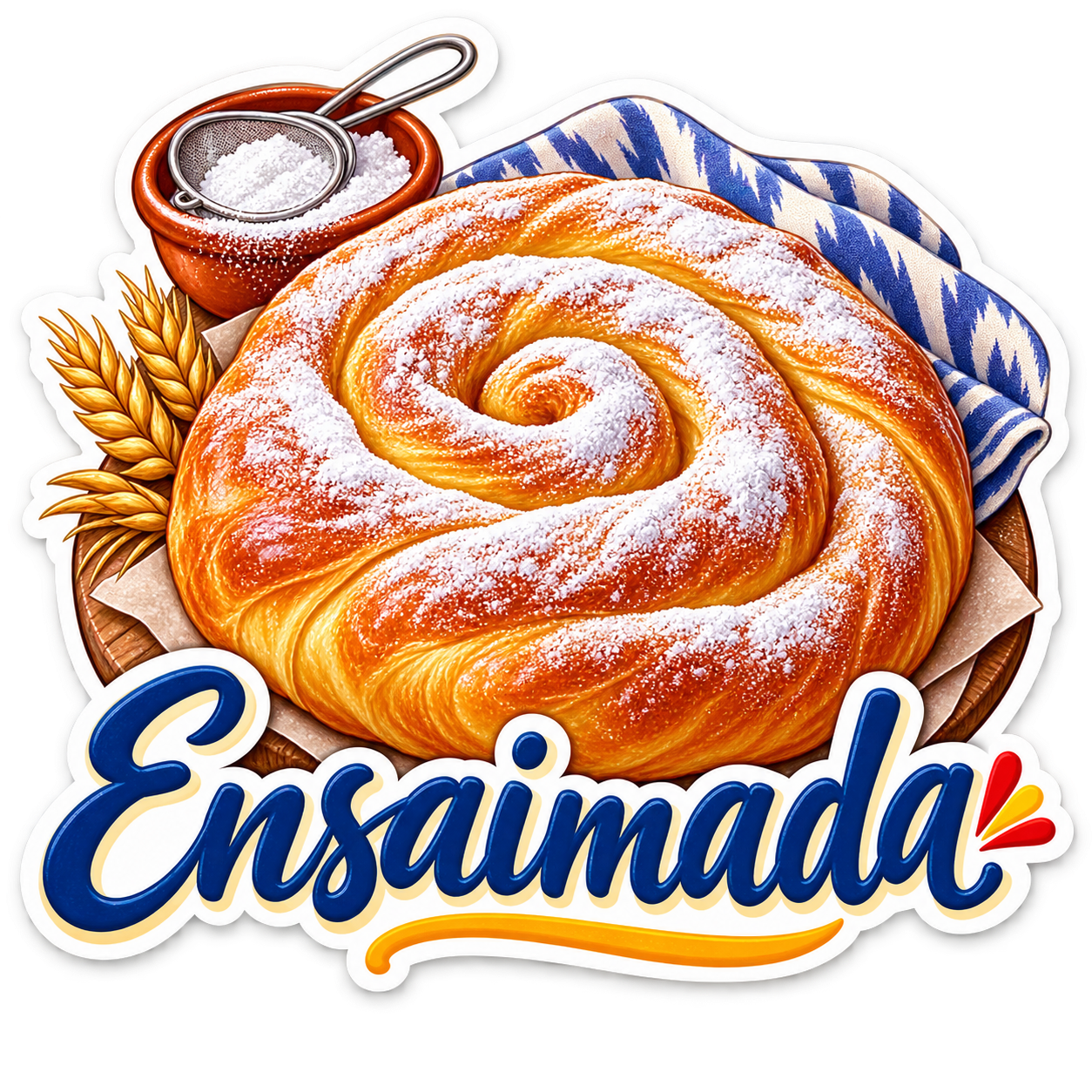
In Mallorca, ensaimadas are everywhere: bakeries, cafés, and even souvenir shops. Sometimes they are sold in huge boxes because the pastry itself can also be enormous.
Its shape looks like a spiral. The dough is soft and airy, and the top is usually covered with plenty of powdered sugar.
The simplest ensaimada has no filling, but there are versions with cream, chocolate, or cabello de ángel, a sweet pumpkin filling.
You can have a small one with coffee or buy a large one to share.
Phrase:Compramos una ensaimada en Mallorca. — We bought an ensaimada in Mallorca.
Arroz con leche — rice, milk, and a little nostalgia
There is no restaurant magic here. It is simply rice cooked in milk with sugar.
But add cinnamon and lemon zest, let everything cook slowly, and it turns into a very comforting dessert.
Arroz con leche can be eaten cold or warm. There is no single “correct” version.
For many Spaniards, it is ordinary homemade food that reminds them of what their parents or grandparents used to make.
The proportions vary from family to family, so two bowls of arroz con leche can taste surprisingly different.
Phrase:Mi abuela prepara un arroz con leche buenísimo. — My grandmother makes amazing rice pudding.
Tocino de cielo — no bacon involved
The name is funny: tocino de cielo can roughly be translated as “heavenly bacon.”
But there is no meat in it.
It is a very sweet dessert made from egg yolks and sugar syrup. Visually, it resembles flan a little, but the taste and texture are noticeably richer.
Tocino de cielo is particularly well known in southern Spain.
If you are perfectly happy with very sweet desserts, go for it. If two bites of cake already make you reach for water, it might be better to share one.
Phrase:El tocino de cielo es muy dulce. — Tocino de cielo is very sweet.
Polvorones — the taste of Spanish Christmas
Walk into a Spanish supermarket in December and polvorones will find you before you find them.
Boxes of these biscuits appear everywhere long before Christmas itself.
They are small, very crumbly biscuits made from flour, sugar, and fat. Almonds are often added, and sometimes cinnamon too.
They really do fall apart incredibly easily. It is no coincidence that the name is linked to the word polvo, meaning “dust.”
Phrase:En Navidad comemos polvorones. — We eat polvorones at Christmas.
Mantecados — another December favourite
Right next to the polvorones, you will almost certainly find mantecados.
It is easy to confuse the two, especially if you have never tried either of them before.
Mantecados come in all kinds of flavours: lemon, almond, chocolate, coconut, cinnamon.
They are also a typical Christmas sweet, and they are especially popular in Andalusia.
Phrase:Estos mantecados son caseros. — These mantecados are homemade.
Panellets — small but surprisingly filling
Autumn in Catalonia is the season for panellets.
These are small sweets made mainly from almonds and sugar. The most recognisable ones are covered with pine nuts.
Their size is deceptive: a few are usually enough because the almond mixture is quite dense.
Besides the classic version, you can also find panellets with coconut, chocolate, and other flavours.
They are especially associated with the festival of La Castanyada.
Phrase:Los panellets se comen tradicionalmente en otoño. — Panellets are traditionally eaten in autumn.
Pestiños — honey, spices, and southern Spain
Pestiños may not look as impressive as some modern desserts, but they have a lot of flavour.
The dough can be scented with anise, sesame, or citrus zest. Small pieces are fried and then covered with honey or sugar.
They are especially common in Andalusia.
They are often made during festive periods, such as Christmas or Semana Santa.
Phrase:Mi familia prepara pestiños en Semana Santa. — My family makes pestiños during Holy Week.
Buñuelos — Spanish doughnuts, but not quite
The easiest way to describe buñuelos is to say they are similar to small doughnuts. But there are so many versions that the comparison only gets you so far.
They are small portions of dough fried in hot oil.
Some buñuelos are hollow inside, while others are filled with cream. Chocolate and other sweet fillings are common too.
They are perfect for ordering several and trying different flavours.
Phrase:Quiero probar los buñuelos de crema. — I want to try the cream-filled buñuelos.
Natillas — homemade cream rather than restaurant glamour
Natillas are not really trying to look fancy.
They are a soft custard made from milk, egg yolks, and sugar. Vanilla, cinnamon, or lemon zest may be added for flavour.
Very often, a simple round biscuit is placed on top.
That is exactly why natillas feel more like a homemade dessert than something designed for a beautiful restaurant photo.
But the flavour is simple, familiar, and comforting.
Phrase:Las natillas llevan canela. — Natillas contain cinnamon.
Quesada pasiega — a sweet from northern Spain
Quesada pasiega is something to look for in Cantabria.
It is not quite a cake and not quite a baked pudding. The texture is dense, but still quite soft.
The ingredients usually include dairy products, eggs, sugar, a little flour, lemon, and cinnamon.
If other Spanish desserts feel too sweet for you, quesada may be a better choice. Its flavour is much more restrained.
Phrase:La quesada pasiega es típica de Cantabria. — Quesada pasiega is a traditional dessert from Cantabria.
What Should You Try First?
You do not have to hunt down all sixteen desserts in one trip. Although, technically, nobody is stopping you.
A good place to start is simply with whatever suits your taste best.
| Dessert | What it is like | Where to look for it |
|---|---|---|
| Churros con chocolate | crispy dough with thick chocolate | all over Spain |
| Crema catalana | soft custard with caramel | Catalonia |
| Tarta de Santiago | dense almond cake | Galicia |
| Ensaimada | soft sweet pastry | Mallorca |
| Tocino de cielo | very sweet egg-yolk dessert | Andalusia |
| Quesada pasiega | somewhere between cake and baked pudding | Cantabria |
If you do not feel like experimenting, choose churros con chocolate. It is hard to go wrong.
If you like soft, creamy desserts, try flan, crema catalana, or natillas.
If almonds are your thing, look for tarta de Santiago and panellets.
In Mallorca, I would not walk past an ensaimada, and in Galicia, I would definitely try tarta de Santiago. Desserts like these are more interesting when you eat them in the place where they actually belong to the local food culture.
There is also a seasonal side to all of this. Torrijas are easiest to find before Easter. Polvorones and mantecados fill the shops before Christmas. Panellets are especially common in Catalonia in autumn.
That means the sweets section of the same Spanish supermarket can look completely different in July and in December.
And in general, when you are in Spain, it can be more fun to skip the trendy dessert with the highest rating and just walk into a small neighbourhood pastelería to see what local people are buying.
If you are not sure what anything is, just ask:
¿Qué postre típico me recomienda?
In other words: “Which local dessert would you recommend?”
Then just try it. Worst case, you get something sweet with your coffee. Best case, you discover the dessert that makes you go looking for that same little pastry shop again.